
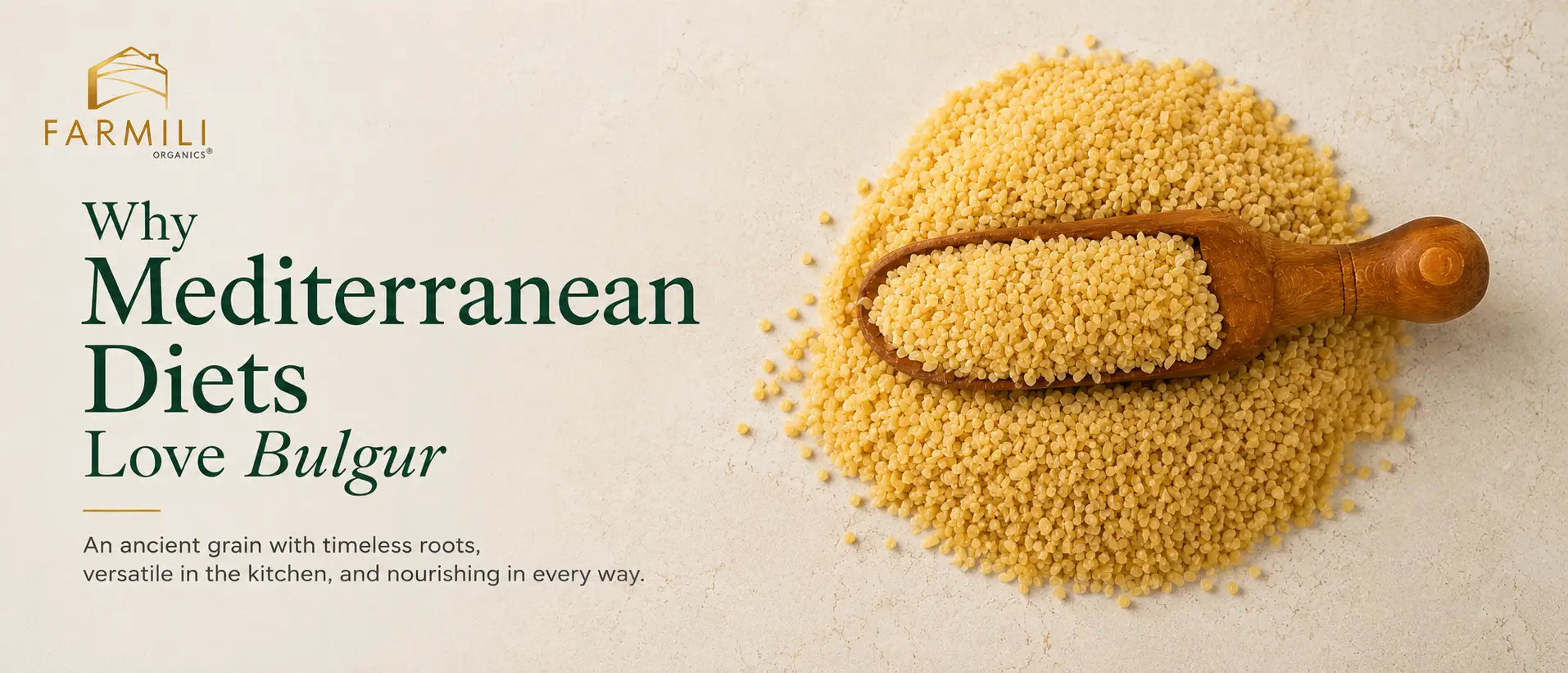
Why Mediterranean Diets Love Bulgur
It appears in pilafs served alongside vegetables, in herb-filled salads shared at family meals, and in recipes that have been passed down through generations. In many households, bulgur is not considered a health food or a specialty ingredient.
It is simply part of everyday life.
Long before nutrition researchers began studying Mediterranean eating patterns, families across the region were already cooking with bulgur because it was practical, affordable, and deeply satisfying.
Today, as more people explore traditional foods, bulgur is finding a place on tables far beyond the Mediterranean.
A Grain with Deep Roots
Bulgur is made by partially cooking whole durum wheat, drying it, and then cracking it into different sizes.
This traditional process dates back centuries and was originally developed as a practical way to preserve wheat and reduce cooking time.
Over generations, bulgur became a staple across the Mediterranean and Middle East, valued not because it was fashionable, but because it was dependable.
A pantry stocked with bulgur meant the foundation of a meal was always close at hand.
Why It Works So Well in Mediterranean Cooking
Mediterranean meals are built around simple ingredients.
Vegetables.
Legumes.
Olive oil.
Herbs.
Yogurt.
Whole grains.
Bulgur fits naturally into this style of cooking because it absorbs flavours beautifully while retaining its own texture.
In Turkey, bulgur pilaf is often served much like rice in Indian households.
In Lebanon, fine bulgur forms the base of tabbouleh, where fresh parsley, mint, tomatoes, and lemon take centre stage.
Across the region, it appears in soups, stuffed vegetables, grain bowls, and countless family recipes.
Its strength lies in its ability to complement other ingredients rather than compete with them.
Why Nutrition Experts Continue to Appreciate Bulgur
Although bulgur became popular through tradition rather than science, many of its qualities align with modern nutrition recommendations.
As a whole grain, bulgur retains much of the texture and character of the original wheat kernel.
Its slightly chewy texture creates a satisfying eating experience, and it pairs naturally with vegetables, legumes, and other wholesome ingredients that form the foundation of balanced meals.
This does not make bulgur a miracle food.
It simply explains why it continues to fit comfortably into eating patterns that emphasize variety, moderation, and minimally processed foods.
Why Bulgur Feels Familiar in Indian Kitchens
Perhaps the most interesting thing about bulgur is how easily it adapts to Indian cooking.
A vegetable bulgur pulao does not feel very different from a traditional rice preparation.
A bulgur upma sits comfortably alongside familiar breakfast dishes.
Its ability to absorb spices, herbs, and seasonings allows it to blend naturally into Indian recipes while offering a different texture from rice or broken wheat.
For many families, it feels less like a foreign ingredient and more like a familiar grain viewed through a different lens.
Farmili's Approach
At Farmili, we produce bulgur from carefully selected Indian durum wheat, the same wheat traditionally used to make bulgur across Mediterranean regions.
We offer fine, medium, and coarse grades so home cooks can choose the texture that best suits their recipes.
Our goal is simple: to make a time-tested grain more accessible to modern Indian kitchens.
A Grain That Has Stood the Test of Time
Few foods remain relevant for centuries.
Bulgur has.
Its popularity was not built through advertising or health claims. It earned its place through everyday use, generation after generation.
Mediterranean families continue to cook with bulgur for the same reason they always have.
It is versatile.
It is satisfying.
And it works beautifully with simple ingredients.
That may be the strongest endorsement any food can receive.